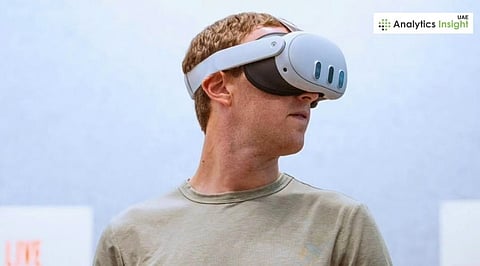


Meta has laid off over 1,000 people in its Reality Labs division this week, shutting down multiple VR studios and putting a $400 million fitness app on life support. The move highlights Zuckerberg’s growing focus on AI technologies.
Meta is scaling back its metaverse ambitions as the company continues ramping up its investments in artificial intelligence. Mark Zuckerberg has been paying big bucks for top AI talent, most notably shelling out $14.3 billion in June to hire Scale AI founder Alexandr Wang, who is now leading AI strategy.
The studios that are closing as part of the latest changes include Armature Studio, Twisted Pixel, and Sanzaru, as well as a technical unit called Oculus Studios Central Technology, according to CNBC reports. Jobs are also being cut at other studios, including Ouro Interactive, which Meta debuted in 2023 to build first-party content for Horizon Worlds.
Andrew Bosworth, Meta’s chief technology officer, is slated to hold an all-hands meeting with Reality Labs on Wednesday (January 14, 2026).
“This is part of that effort, and we plan to reinvest the savings to support the growth of wearables this year,” a Meta spokesperson said, without commenting specifically on the layoffs.
Supernatural, a VR fitness app that Meta purchased for $400 million in 2023, was moved into maintenance mode. It indicates that it will be run by a skeleton crew and no longer receive new content.
While Meta’s VR projects have never taken off, the company experienced better success in AI-powered wearables through a partnership with EssilorLuxottica to make Ray-Ban Meta smart glasses.
In September, the two companies unveiled the Meta Ray-Ban Display glasses, which cost $799 and contain a single, built-in display that shows users small messages and previews of photos.
Meta said last week that it would delay the global debut of the display glasses, citing “limited” inventories amid “unprecedented” US demand.
Luxottica CFO Stefano Grassi said in October that his company will be able to reach the 10 million unit capacity for the glasses that it had originally planned to hit by the end of 2026.
Despite the downsizing, Meta is not abandoning VR. The company is courting developers who build games for Roblox, which is a virtual world gaming platform. It is popular among kids to build experiences for Horizon Worlds.
Roblox says it has more than 150 million daily users, while Horizon, which Zuckerberg showcased at the time of the company name change, has never drawn more than a couple of hundred thousand active users a month.
By taking cues from the likes of Roblox and Minecraft, which Microsoft acquired in 2014, Horizon Worlds could serve as a funnel for Meta to attract a younger audience to its services.
“It kind of follows that Meta will be moving it towards mobile as mobile gaming has become very popular over the last five years or so,” said Ben Hatton, an analyst for CCS.
Meta’s decision to scale back its VR efforts comes 12 years after Facebook entered the market with the $2 billion purchase of Oculus VR.
Since late 2020, Meta’s Reality Labs division has logged over $70 billion in cumulative losses. In its latest quarterly earnings in October, Meta said Reality Labs recorded a $4.4 billion loss on $470 million in sales.
The company is wrestling with a scattershot AI strategy as it tries to keep pace with OpenAI and Google, whose large language models and AI features are soaring in popularity. Meta plans to release its next frontier model, codenamed Avocado, in the first quarter of this year.